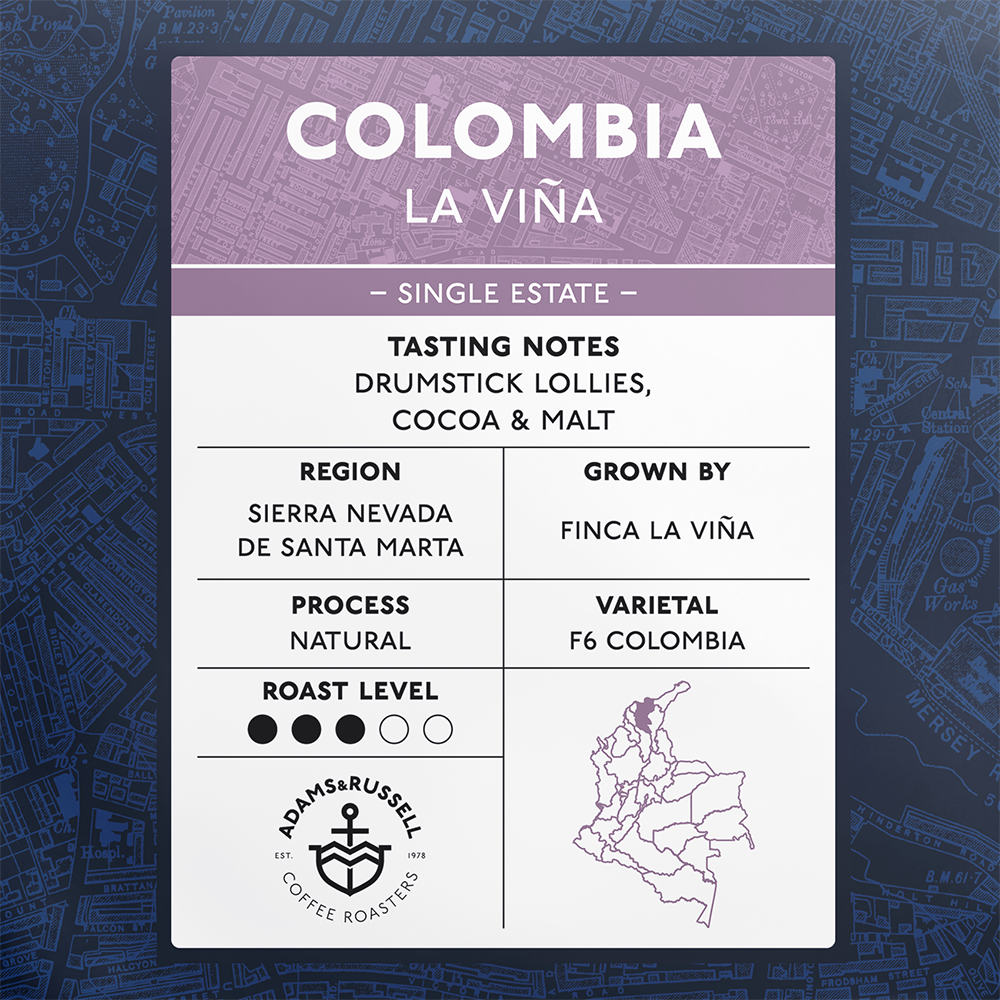
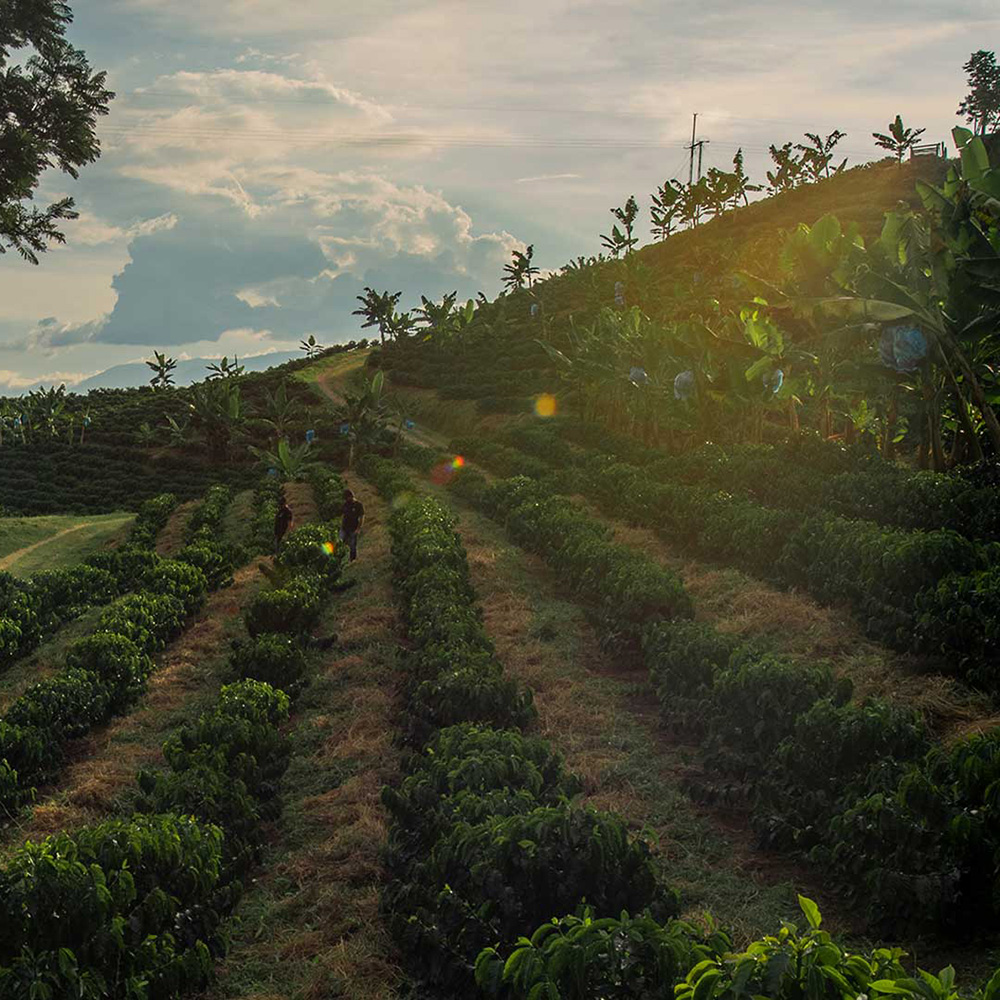
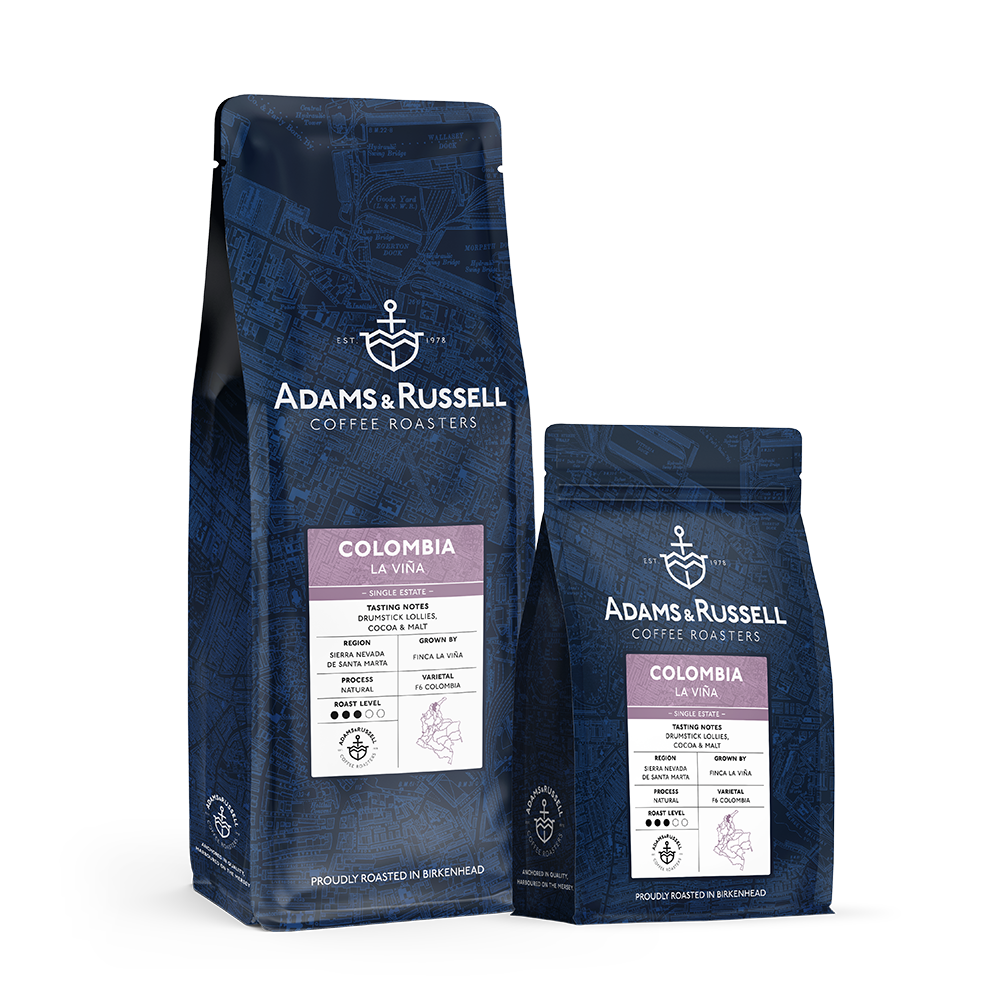
William Sepulveda is a third generation coffee farmer. His farm, La Viña is situated in the Pueblo Bello municipality of northern Colombia. At an altitude of 1610 metres above sea level the farm has the perfect climate for growing coffee, just as it was when William’s grandparents planted the farm’s first coffee plants, instilling in him the value of cultivating good crops.
William has focused his passions on producing great, naturally processed coffee.
What is the Natural process?
Naturally processed coffee is made by leaving most or all the fruit on the coffee beans as they dry, then removing it after they’re dry. This is opposed to washed coffee, when the fruit is removed before the beans are dried. Natural coffee can offer complex and rich sweetness of flavour and sometimes a tiny bit of a funky, fermented note, whereas washed coffee offers more clarity and simplicity of flavour.
Harvest & Post Harvest
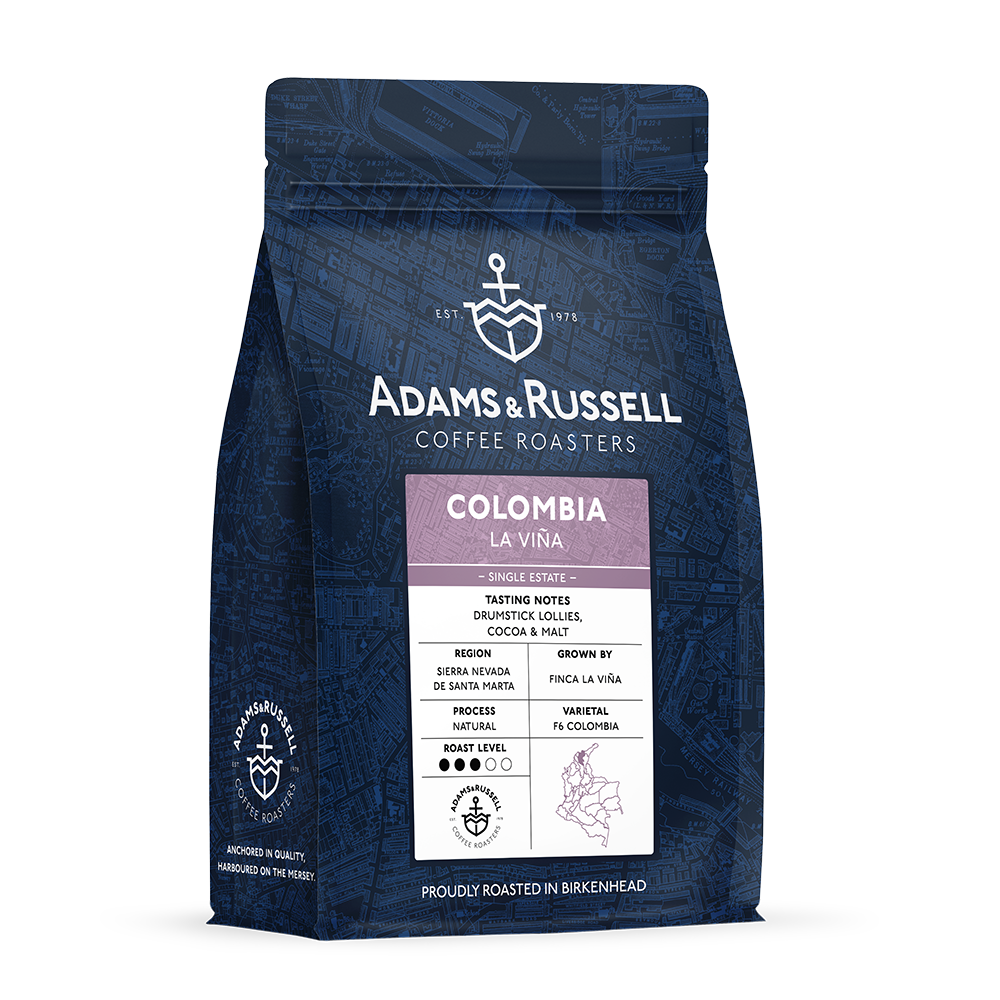
This coffee offers a malty, well-rounded sweetness and a creamy fruitiness which almost reminds us of Drumsticks Squashies sweets. Brew it as a pour over, with a suggested ratio of around 1:15 (around 20grams for a 300ml cup) to pull out the creamy fruitiness. You could brew it as an espresso and tighten the grind up so you’re reaching more than a 30 second extraction time for around a 35-40g output (with 18grams in) and you’ll get a punchy and complex cup. Turn it into a flat white and you might just be surprised at what it has to offer.
Coffee In Colombia
Colombia has been producing and exporting coffee renowned for their full body, bright acidity and rich aftertaste since the early 19th century. It boasts a wide range of climates and geographic conditions that, in turn, produce their own unique flavours in coffee. This also means that harvest times are incredibly varied, between all of its different regions, Colombia produces fresh crop nearly all year round.
The increasing focus on the specialty industry is changing the way traders and farmers do business. It is becoming more common for farmers to isolate the highest quality beans in their lots to market separately. These higher-quality lots are often sold under specific brands or stories. Colombia has quickly expanded its certification options over the past decade. The most common certifications available are Fairtrade, Rainforest Alliance, UTZ and Organic.